






Why Rajasthan is India's Most Iconic Travel Destination
Rajasthan — the Land of Kings — is arguably India's most dramatic and diverse travel destination. Stretching across 342,000 square kilometres of northwestern India, it is home to some of the country's most spectacular architecture, richest cultural traditions, and most unique natural landscapes. From the sky-blue houses of Jodhpur and the golden dunes of Jaisalmer to the rose-tinted palaces of Jaipur and the serene lakeside of Udaipur, every city in Rajasthan tells a story of valour, art, and timeless elegance.
As India's most-visited state, Rajasthan attracts over 52 million domestic and 1.5 million international tourists annually. Its six UNESCO World Heritage Sites, three national parks, and 400+ forts and palaces make it an almost inexhaustible trove of experiences. Whether you are a first-time traveller looking for a 3-night Jaipur getaway, a wildlife enthusiast heading to Ranthambore National Park, or a history buff planning a multi-city fort circuit, Rajasthan consistently rewards every kind of explorer.
The most convenient way to experience Rajasthan's widespread attractions is by road — and Vedanshi Cabs offers the most reliable, comfortable, and affordable Rajasthan taxi service with experienced local drivers who know every route, every landmark, and every hidden gem across the state. Visit our homepage to explore all our cab packages, or book your Rajasthan tour taxi now.
Udaipur — The City of Lakes
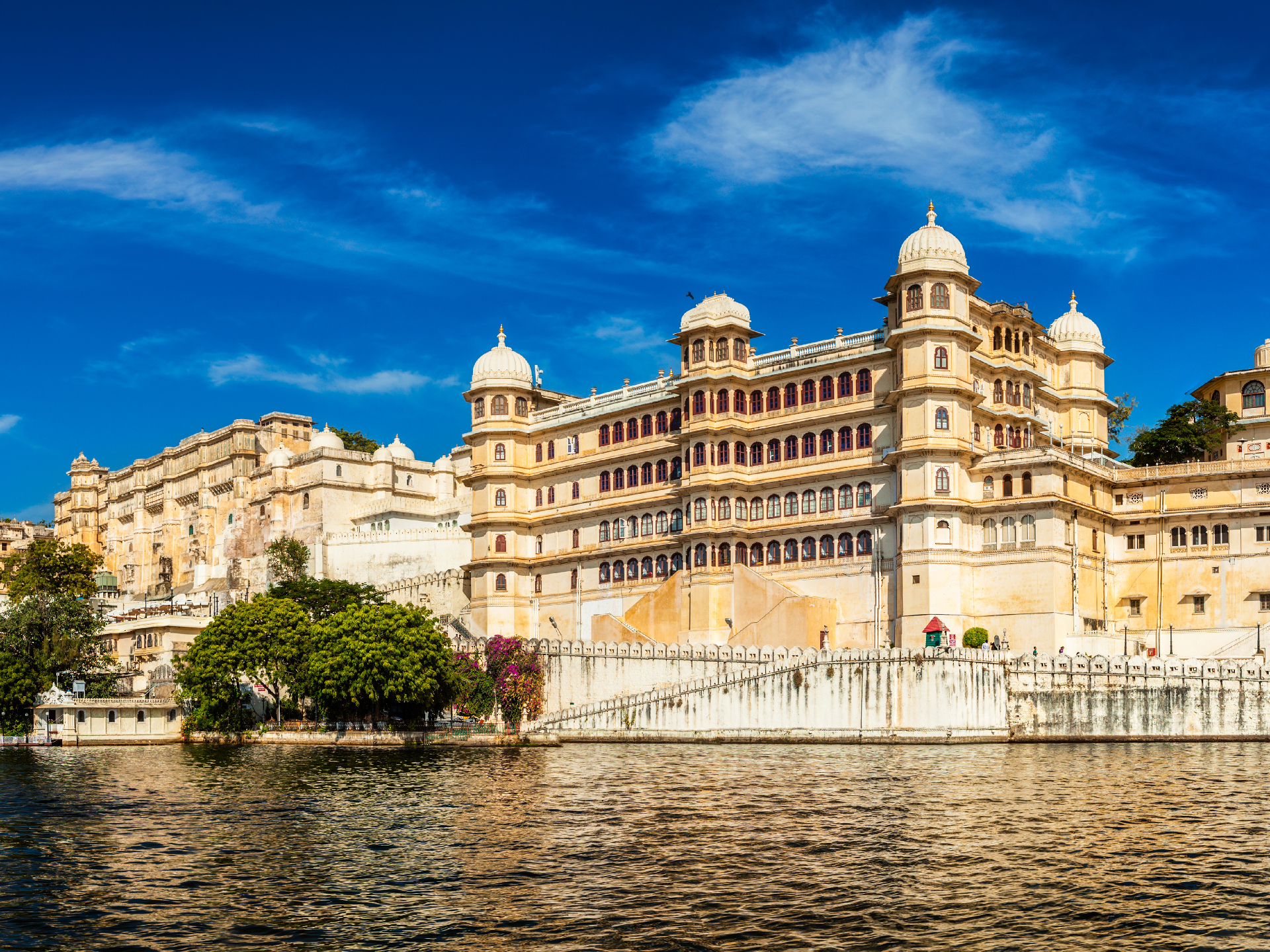
Udaipur is one of India's most romantically beautiful cities — a mesmerising collection of palaces, temples, lakes and gardens set against the Aravalli hills of southern Rajasthan. Often called the "Venice of the East", Udaipur was founded in 1559 by Maharana Udai Singh II of the Sisodia Rajput clan and served as the capital of the Mewar kingdom for centuries.
Must-visit places in Udaipur:
- City Palace — an immense lakeside palace complex housing museums, terraced gardens and panoramic lake views
- Lake Pichola — a shimmering artificial lake with boat rides to the iconic Jag Mandir island palace
- Fateh Sagar Lake — a serene second lake connected by a narrow channel, ideal for morning walks
- Saheliyon Ki Bari — the 18th-century royal garden of the queen's maids, with lotus pools and marble pavilions
- Sajjangarh (Monsoon Palace) — a hilltop retreat with sweeping sunset views over the city and lakes
Vedanshi Cabs offers full-day Udaipur sightseeing taxi packages as well as outstation cabs from Udaipur to Jaipur, Jodhpur, Mount Abu, Ahmedabad, Kumbhalgarh, Chittorgarh and Nathdwara. Our drivers know every approach road and shortcut around Udaipur's heritage core.
Jaipur — The Pink City
Jaipur, the capital of Rajasthan, is a city of extraordinary contrasts — ancient walled markets alongside modern boutiques, royal palaces next to bustling bazaars, and Mughal architecture blending seamlessly with Rajput grandeur. Founded in 1727 by Maharaja Sawai Jai Singh II, Jaipur was one of India's first planned cities and became a UNESCO World Heritage Site in 2019.
Top Jaipur sightseeing destinations:
- Amber Fort — a magnificent hilltop fortress with mirrored halls, elephant rides and panoramic ramparts
- Hawa Mahal (Palace of Winds) — the iconic 5-storey pink sandstone facade with 953 carved lattice windows
- City Palace — a royal complex in the old city housing museums of art, textiles and royal armoury
- Jantar Mantar — an 18th-century UNESCO-listed astronomical observatory with massive stone instruments
- Nahargarh Fort — a hilltop retreat above the city with stunning sunset views over the Pink City
- Jal Mahal — a stunning palace appearing to float on Man Sagar Lake
- Ranthambore National Park — within day-trip distance, offering tiger safari adventures
From Jaipur, our cabs connect you easily to Jaisalmer, Ajmer, Pushkar, and the Golden Triangle with Delhi and Agra.
Jodhpur — The Blue City
Jodhpur, the Sun City and Blue City of Rajasthan, is a place of astonishing atmosphere — its old city a maze of indigo-painted houses huddled beneath the imposing walls of Mehrangarh Fort. The fort, which rises 125 metres above the plains on a rocky promontory, is widely regarded as one of India's finest examples of military architecture.
Jodhpur's key attractions:
- Mehrangarh Fort — India's mightiest Rajput fort with an exceptional museum of royal artefacts
- Umaid Bhawan Palace — a grand art deco palace still home to the Jodhpur royal family, partly a heritage hotel
- Jaswant Thada — a stunning white marble cenotaph with intricate carvings beside a tranquil lake
- Mandore Garden — the former Marwar capital with royal cenotaphs and the Hall of Heroes
- Osian — ancient cluster of 8th-11th century temples in the Thar Desert, 65 km from Jodhpur
Jodhpur is strategically located for onward journeys to Jaisalmer (290 km), Udaipur (260 km), and Pushkar (190 km) — all well within a comfortable cab ride from Vedanshi Cabs.
Jaisalmer — The Golden City
Jaisalmer, rising from the heart of the Thar Desert like a mirage of golden sandstone, is one of the world's most dramatically situated cities. Built in 1156 CE by Rawal Jaisal, the walled city — entirely constructed from golden-hued Jurassic limestone — sits atop Trikuta Hill and still contains over 3,000 residents inside its walls, making it one of the few living forts in the world.
Jaisalmer's unforgettable experiences:
- Jaisalmer Fort — the magnificent 99-bastion living fort, a UNESCO World Heritage Site
- Sam Sand Dunes — the iconic rolling desert dunes, best visited at sunset for camel safari and cultural performances
- Patwon Ki Haveli — the grandest of Jaisalmer's merchant mansions, with five interconnected apartments covered in detailed carvings
- Gadisar Lake — a peaceful rain-water reservoir dotted with temples, chattris and migratory birds
- Bada Bagh — royal cenotaphs in the desert landscape, especially atmospheric at dusk
- Desert Safari — camel and 4x4 dune safari experiences available at sunset
Mount Abu, Ajmer & Pushkar
Mount Abu is Rajasthan's only hill station, perched at 1,220 metres in the Aravalli Range and providing cool respite from the desert heat. Its most celebrated monument is the Dilwara Jain Temples — five 11th-16th century marble temples renowned for their extraordinarily intricate carvings that rank among India's finest artistic achievements. Other highlights include Nakki Lake, Guru Shikhar (the highest peak in the Aravallis), Sunset Point and Honeymoon Point.
Ajmer and Pushkar together form one of India's most important spiritual pilgrimage circuits. Ajmer is home to the Ajmer Sharif Dargah, the revered shrine of the Sufi saint Moinuddin Chishti, which draws millions of pilgrims annually regardless of religion. Just 14 km away, Pushkar is one of India's holiest cities — centred on the sacred Pushkar Lake and one of the world's only temples dedicated to Lord Brahma. Every November, Pushkar hosts the legendary Pushkar Camel Fair, a 14-day festival drawing over 400,000 visitors and 11,000 camels.
Kumbhalgarh, Chittorgarh & Ranthambore
Kumbhalgarh Fort, built in the 15th century by Maharana Kumbha, stands atop the Aravalli hills 90 km north of Udaipur. Its defensive wall, stretching over 36 kilometres, is often called the Great Wall of India — second only to the Great Wall of China in length. The fort complex encloses 360 temples, palaces and royal residences within its vast perimeter and is a UNESCO World Heritage Site. Nearby Ranakpur is home to the extraordinary Ranakpur Jain Temple, whose main marble sanctuary contains 1,444 uniquely sculpted pillars — not one exactly alike.
Chittorgarh Fort is the largest fort in India and one of the most storied — the stage for three legendary sieges known as jauhars (mass self-immolations) by Rajput women to preserve honour. Its hilltop campus of 700 acres contains palaces, temples, towers (including the 37-metre Vijay Stambha or Tower of Victory), and reservoirs, offering a deeply moving experience of Rajasthan's martial history.
Ranthambore National Park near Sawai Madhopur is India's most celebrated tiger reserve, home to 60+ Bengal tigers, leopards, sloth bears, crocodiles and over 500 bird species. The dramatic landscape — combining dense deciduous forest, rocky ridges, ancient ruins and clear lakes — makes tiger sightings here particularly atmospheric. The park also contains the historic Ranthambore Fort, perched high above the jungle, and the famous Trinetra Ganesh Temple. Vedanshi Cabs offers comfortable cab transfers from Jaipur to Ranthambore for wildlife enthusiasts.
Best Time to Visit Rajasthan
The ideal time to visit Rajasthan is October through March (winter season) when temperatures remain pleasant between 10°C and 28°C and the desert sun is mild. Winter also coincides with many of Rajasthan's greatest cultural events:
- November — Pushkar Camel Fair, Diwali celebrations across the state
- January — Jaipur Literature Festival (the world's largest free literary festival), Kite Festival
- February–March — Holi in Jaipur and Udaipur (one of India's most spectacular settings), Desert Festival in Jaisalmer
Monsoon (July–September) brings lush greenery, lower prices and smaller crowds — ideal for budget travellers who don't mind some rain. Summer (April–June) is very hot in the plains (up to 48°C) but Mount Abu stays pleasant and some forts are beautifully uncrowded.


