Photo: Ansh patanker / Wikimedia Commons, CC0
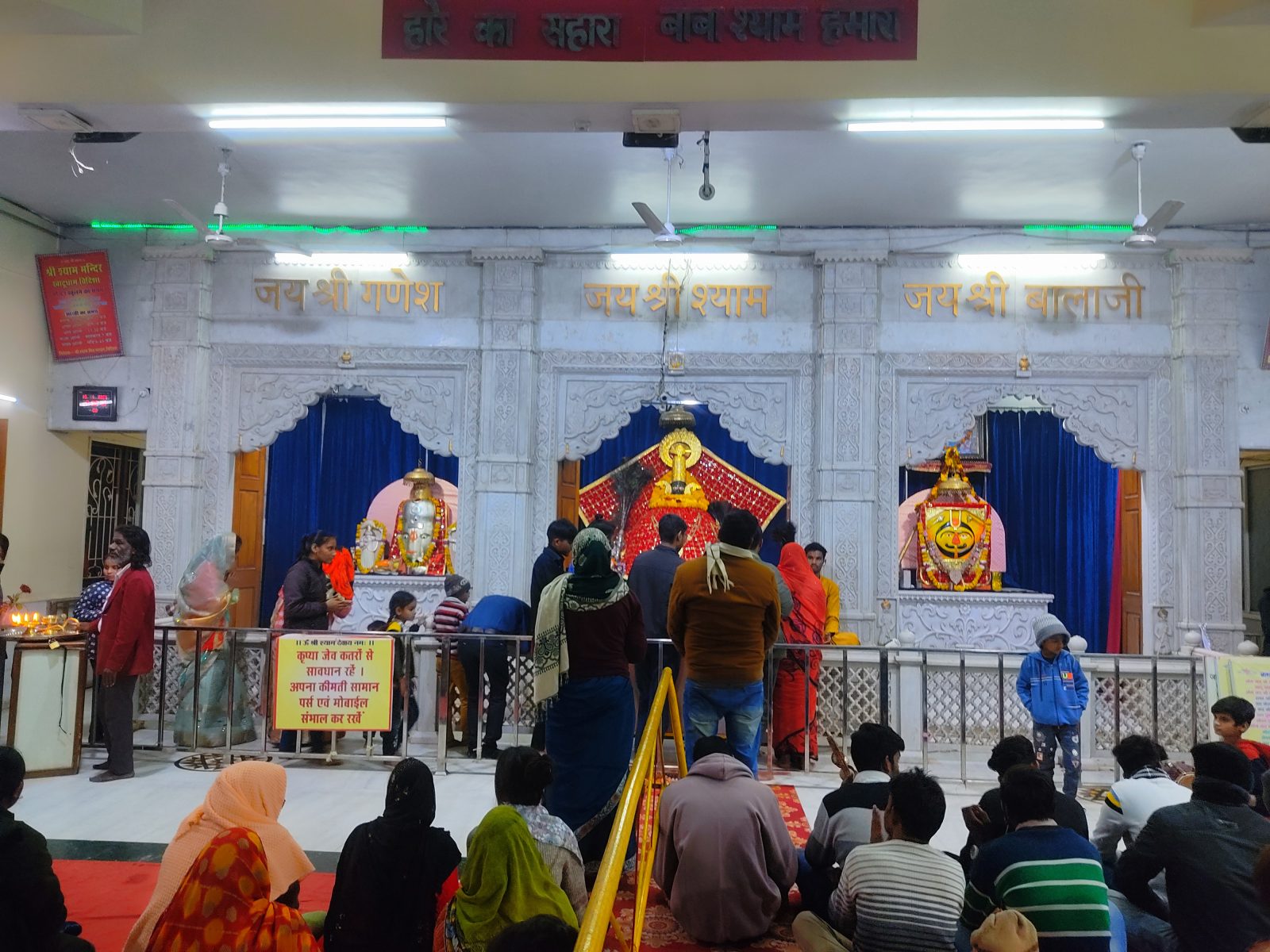
Khatu Shyam Ji Temple, located in Khatu village in Sikar district, Rajasthan, is one of the most visited pilgrimage destinations in North India. Devotees travel here throughout the year, but the temple becomes especially crowded on Ekadashi, Purnima, weekends and during the annual Falgun Lakhi Mela.
If you are planning a visit, the most important things to understand are the seasonal darshan timings, aarti schedule, crowd patterns, travel routes and parking arrangements. A little planning can make a big difference, especially if you are travelling with senior citizens, children or a large family group.
Temple Darshan Timings
Khatu Shyam Ji Temple follows different timings in summer and winter.
Summer Timings
Morning: 4:30 AM to 12:30 PM
Evening: 4:00 PM to 10:00 PM
Winter Timings
Morning: 5:30 AM to 1:00 PM
Evening: 5:00 PM to 9:00 PM
The temple closes in the afternoon between the morning and evening darshan periods. Visitors arriving from Jaipur or other nearby cities should plan their journey so they do not reach just after the morning session has closed.
Special 24-Hour Darshan Days
One important exception is Shukla Paksha Ekadashi, commonly known as Gyaras. On these special days, and during the major annual festival period, the temple may remain open continuously for 24 hours to accommodate the large number of devotees.
This does not necessarily mean queues will be shorter — Ekadashi is actually one of the busiest times to visit, so devotees should expect a much longer waiting period.
Aarti Timings
Five main aartis are generally performed during the day:
- Mangala Aarti: Summer 4:30 AM / Winter 5:30 AM — the first aarti of the day, popular for an early, peaceful start.
- Shringar Aarti: Summer 7:00 AM / Winter 8:00 AM — performed after the deity is decorated for the day.
- Bhog Aarti: 12:30 PM throughout the year — around the end of the morning darshan period.
- Sandhya Aarti: Summer 7:30 PM / Winter 6:30 PM — the exact experience can vary slightly with seasonal changes and local temple arrangements.
- Shayan Aarti: Summer 10:00 PM / Winter 9:00 PM — the final aarti before the temple closes for the night.
If attending a specific aarti is important to you, it is better to reach the temple at least 30 to 45 minutes earlier, particularly on weekends and religiously important days.
Entry Fee and VIP Darshan
General darshan at Khatu Shyam Ji Temple is completely free. There is no official paid VIP darshan ticket sold by the temple board.
Visitors may be able to register for a free online darshan token through the official Shree Shyam Mandir Board system when that facility is available — mainly to organise queues and reduce unnecessary waiting. Visitors should avoid paying unofficial agents who claim to provide guaranteed VIP access or instant darshan.
Dress Code and Temple Etiquette
The temple expects visitors to dress modestly and respectfully. Traditional Indian clothing is the most suitable choice — men can wear dhoti-kurta, kurta-pajama or clean shirts and trousers; women generally wear sarees, salwar suits or modest Indian outfits. A dupatta or head covering is commonly used by women while entering the temple.
Very casual or revealing clothing such as shorts, mini-skirts, sleeveless tops and badly ripped jeans should preferably be avoided. Photography and mobile phone use are not permitted inside the Garbhagriha and inner sanctum area — follow the instructions given by temple staff and security personnel.
Best Time to Visit
If your priority is a quieter darshan, weekdays are usually better than weekends. A good time to visit is Monday to Friday, between 6:00 AM and 9:00 AM — crowds are generally more manageable than later in the day.
The busiest times are usually Saturday, Sunday, Ekadashi, Purnima, major religious holidays and the Falgun Mela period. If you are travelling with elderly family members, a weekday morning is strongly preferable.
Falgun Lakhi Mela – What Visitors Should Know
The Falgun Lakhi Mela, generally held during February or March, is the largest annual event associated with Khatu Shyam Ji. During the mela, Khatu village receives an enormous number of pilgrims — crowd estimates can run into 20 to 30 lakh devotees over the festival period.
At this time, normal travel patterns change completely. Road diversions, pedestrian-only zones, temporary parking grounds and security restrictions are common. Anyone planning a visit during the Falgun Mela should not expect normal taxi drop-offs or regular traffic movement close to the temple.
How to Reach Khatu Shyam Ji
The temple is located in Khatu village, Sikar district, Rajasthan. For most travellers, Jaipur is the main gateway.
Nearest Airport
The closest major airport is Jaipur International Airport (JAI), approximately 80 to 95 km from Khatu Shyam Ji Temple depending on the road route used. From the airport, travellers can hire a private cab directly to Khatu — the drive generally takes around 1.5 to 2.5 hours, depending on Jaipur city traffic and congestion near Ringas.
| Starting Point | Approx. Distance & Travel Time | Approx. One-Way Cab Fare | Railway Option |
|---|---|---|---|
| Jaipur | Around 80–90 km, approximately 1.5–2 hours | Sedan: ₹1,500–₹1,800; SUV: ₹2,200–₹2,600 | Ringas Junction (RGS) - several trains from Jaipur, then e-rickshaw/shared jeep/local taxi/bus for the last 17 km (30–45 min). |
| Ajmer | Around 175–190 km, approximately 3.5–4 hours | Sedan: ₹3,200–₹3,800; SUV: ₹4,500–₹5,200 | Ringas Junction remains the main railway point for the final leg. |
| Jodhpur | Around 310–325 km, approximately 5–5.5 hours | Sedan: ₹5,500–₹6,200; SUV: ₹7,500–₹8,500 | Services connecting Jodhpur/Raika Bagh with Ringas or nearby routes. |
| Jaisalmer | Around 505–550 km, approximately 8–10 hours (plan a full-day journey) | Sedan: ₹9,500–₹11,000; SUV: ₹13,000–₹15,000 | No simple direct train - usually need to change at Jodhpur or Jaipur before continuing toward Ringas. |
Taxi fares can vary depending on vehicle category, waiting time, season and demand. For a firm quote, book directly: Jaipur to Khatu Shyam Ji taxi, Ajmer to Khatu Shyam taxi, Jodhpur to Khatu Shyam taxi, or Khatu Shyam to Jaisalmer cab.
Nearest Railway Station
For now, the most practical railway station remains Ringas Junction (RGS), approximately 17 km from Khatu village, with local transport widely available from the station. A dedicated Sundarpura/Khatu Shyam Ji railway station is also under development, which is expected to improve direct rail access to the pilgrimage area in the future.
Parking at Khatu Shyam Ji
Private vehicles are generally not allowed to drive all the way to the temple entrance. The local administration operates a number of designated parking areas around the outer parts of Khatu. On normal weekdays, parking is relatively straightforward.
However, during weekends, Ekadashi and festivals, vehicles may be diverted to larger open-ground parking areas farther away. In such cases, visitors may need to walk 1 to 2 km, take an e-rickshaw, use a local shuttle, or follow temporary pedestrian routes. If travelling with senior citizens, it is a good idea to check how close your driver can legally drop passengers before heading to the parking area.
Best Drop-Off Point
A commonly used drop-off landmark is Toran Dwar / Toran Gate. Beyond this point, private vehicle movement may be restricted — visitors generally continue towards the temple on foot or by permitted local transport. On festival days, even this drop-off point may change due to police barricades and crowd-control arrangements.
Accommodation Near Khatu Shyam Ji
Khatu has a large number of dharamshalas, guesthouses and budget stays, most designed specifically for pilgrims. Popular options include places such as Shree Kanha Kunj Dharamshala and Sawariya Dharamshala (located relatively close to the temple area).
Typical room rates are approximately: non-AC rooms ₹500 to ₹900 per night, AC/family rooms ₹1,200 to ₹2,500 per night. Prices can increase significantly during weekends, Ekadashi and Falgun Mela. Advance booking is strongly recommended during busy periods.
Food and Prasad
There are many prasad shops and food stalls around the temple area. Common prasad packets usually contain items such as peda, mishri or sugar candy, saunf and other traditional offerings. Large community kitchens, or Bhandaras, also operate in and around Khatu, particularly during busy religious periods, with free traditional meals often served to pilgrims. The area around Shree Shyam Kund is also known for religious activity, food distribution and pilgrim movement.
Important Driver and Route Tips
Clearly Mention the Correct Khatu
This is more important than it may seem. When booking a cab, always specify: "Khatu Shyam Ji Temple, Khatu Village, Sikar District, Rajasthan." There are several smaller Khatu Shyam temples in Jaipur, Delhi and other cities, and a driver unfamiliar with your exact destination may otherwise confuse the main temple with Shree Khatu Shyam Delhi Dham, replica temples inside Jaipur, or other local shrines named after Khatu Shyam Ji. Giving the full location avoids unnecessary confusion.
Jaipur to Ringas Road
The main route from Jaipur generally follows NH-52 through Chomu towards Ringas. Much of this route is relatively good and suitable for long-distance travel. The final section from Ringas towards Khatu is where delays become more common.
Ringas to Khatu Can Be the Slowest Part
The last 17 km between Ringas and Khatu may look short on a map, but it can take much longer than expected on peak days. Traffic builds up because of pilgrim buses, taxis, e-rickshaws, private cars, pedestrian groups and Nishan Yatra processions. If you are visiting on a busy day, always keep additional time for this stretch.
Special Travel Rules During Falgun Mela
During the annual Falgun Mela, the normal Ringas-to-Khatu journey changes dramatically. The 17 km stretch can become part of the traditional Nishan Yatra, where large groups of devotees walk towards the temple carrying religious flags. At peak times, sections of the route may be converted into pedestrian-only zones, and private vehicles may be stopped much earlier than usual — drivers may have to drop passengers around Ringas, temporary mela parking areas, or administrative bypass zones, from where devotees continue on foot or by authorised shuttle. Anyone visiting during Falgun Mela should avoid planning the journey using normal-day driving times.
Suggested Jaipur to Khatu Day Trip
For a smooth visit from Jaipur, an early start works best. A practical schedule could look like this:
- 4:30–5:00 AM: Leave Jaipur
- 6:30–7:00 AM: Reach Khatu
- 7:00–9:00 AM: Darshan
- 9:00–10:00 AM: Visit Shyam Kund and nearby religious spots
- 10:00–11:00 AM: Breakfast or prasad
- 11:00 AM onwards: Begin return journey or explore nearby places
This schedule allows you to complete darshan before the heavier daytime rush begins.
Practical Advice for Families
If you are travelling with children or senior citizens, avoid trying to cover too much in a single visit. Carry drinking water, comfortable footwear, basic medicines, light snacks and a small bag for personal items — though remember that security restrictions may apply near the main temple entrance.
Keep your driver's phone number written down separately in case mobile connectivity becomes unreliable in crowded areas. It is also useful to decide on a fixed meeting point before entering the main queue.
Final Travel Tip
For the easiest experience, choose a weekday morning between 6:00 AM and 9:00 AM. If you specifically want to visit on Ekadashi, Purnima or during Falgun Mela, be prepared for much longer queues, road restrictions and distant parking.
Before travelling, it is always sensible to reconfirm current darshan timings, online-token arrangements, parking rules and festival restrictions through the temple's official channels, since these can change depending on the season and crowd situation.
Frequently Asked Questions
What are the darshan timings at Khatu Shyam Ji Temple?
Summer: 4:30 AM–12:30 PM and 4:00 PM–10:00 PM. Winter: 5:30 AM–1:00 PM and 5:00 PM–9:00 PM. On Ekadashi and major festival days the temple may stay open 24 hours.
How to reach Khatu Shyam Ji from Jaipur?
By road it's around 80–90 km, roughly 1.5–2 hours. By train, Ringas Junction has frequent Jaipur connections, then a 30–45 minute local transfer. Book a Jaipur to Khatu Shyam Ji taxi for a direct trip.
How to reach Khatu Shyam Ji from Ajmer?
By road it's around 175–190 km, roughly 3.5–4 hours. Book an Ajmer to Khatu Shyam taxi directly.
How to reach Khatu Shyam Ji from Jodhpur?
By road it's around 310–325 km, roughly 5–5.5 hours. Book a Jodhpur to Khatu Shyam taxi for the trip.
Is there an entry fee at Khatu Shyam Ji Temple?
No, general darshan is completely free. A free online darshan token may be available through the official Shree Shyam Mandir Board system to help organise queues.
What is the best time to visit Khatu Shyam Ji Temple?
Weekday mornings between 6:00 AM and 9:00 AM are usually calmest. Saturday, Sunday, Ekadashi, Purnima and the Falgun Mela period are the busiest.